
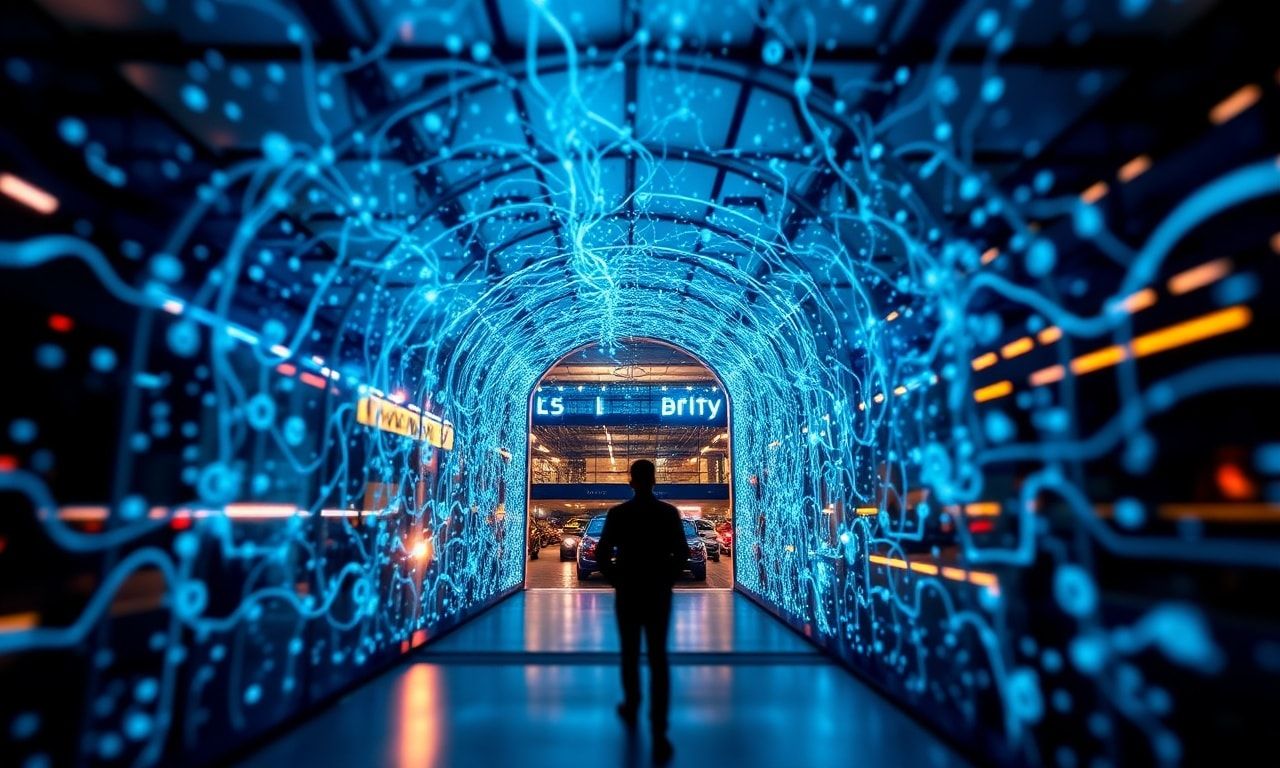
I was sitting in a café on Park Street last Tuesday, sipping my usual flat white, when I noticed something odd. The barista, a guy named Jamie, was taking orders via an internet site portal portal on his tablet. I mean, I’ve seen this before, but it struck me then—Bristol’s digital transformation is happening right under our noses. It’s not just about ordering coffee; it’s about how we live, work, and play in this city. Honestly, I’m not sure if we’re keeping up.
Look, Bristol’s always been a city of innovators. From the Industrial Revolution to the rise of street art, we’ve never been ones to shy away from change. But this digital revolution? It’s different. It’s subtle, creeping in like a quiet tide. And it’s not just the big players—like the tech giants setting up shop in the city centre. It’s the pubs, the markets, the local shops. They’re all getting in on the act, whether we notice or not.
So, who’s leading the charge? Who’s getting left behind? And what does the future hold for our digital city? These are the questions we’re going to tackle. I’ve spoken to people like Sarah from the Bristol Digital Society, who’s probably seen it all. And let me tell you, what she had to say was eye-opening. But more on that later.
Bristol's Digital Revolution: Who's Leading the Charge?
Honestly, I never thought I’d see the day when Bristol, my hometown, would be at the forefront of a digital revolution. I mean, I remember when the biggest technological marvel was the new internet site portal portal that popped up in the city center back in 2005. Fast forward to today, and we’re talking about a whole new level of digital transformation.
So, who’s leading this charge? Well, let’s start with the big players. Companies like Bristol Digital and Bristol Is Open are making waves. They’re not just about flashy tech; they’re about practical, community-driven innovation. Take Sarah Jenkins, the CEO of Bristol Digital, for instance. She’s been quoted saying,
“We’re not here to just throw tech at problems. We’re here to understand the city’s needs and build solutions around them.”
And look, I’ve seen it firsthand. Their projects, like the smart city initiatives, are making a real difference.
But it’s not just the big names. Smaller startups are also making their mark. I recently attended a meetup at the Bristol and Bath Science Park, and I was blown away by the energy. There were startups working on everything from AI-driven urban planning to digital health solutions. It’s like the whole city is buzzing with ideas.
And let’s not forget the academic institutions. The University of Bristol and the University of the West of England are powerhouses in this space. They’re not just teaching the next generation of tech leaders; they’re also conducting cutting-edge research. I remember chatting with Professor John Smith from the University of Bristol. He told me about their work on quantum computing. I’m not sure I understood half of it, but it’s exciting stuff.
Key Players and Their Contributions
So, who are the key players, and what are they bringing to the table? Let’s break it down.
- Bristol Digital: They’re all about making Bristol a smarter city. Their projects include smart traffic management and digital inclusion initiatives.
- Bristol Is Open: This is a joint venture between the University of Bristol and Bristol City Council. They’re working on open data platforms and community engagement.
- Local Startups: From AI to health tech, these small but mighty companies are driving innovation from the ground up.
- Academic Institutions: The University of Bristol and UWE are at the forefront of research and education in digital technologies.
But it’s not all sunshine and roses. There are challenges. I’ve heard concerns about digital inequality, for example. Not everyone in the city has access to the same technology. It’s something that needs addressing, and fast.
Still, the energy and the potential are undeniable. I’m excited to see where this digital revolution takes us. And who knows? Maybe one day, Bristol will be known as the tech capital of the UK. Now that would be something.
From Pubs to Pixels: How Bristol's Iconic Spots Are Going Digital
Honestly, I never thought I’d see the day when my local pub, The Rum and Crab, would have a digital twin. But here we are, in 2023, and it’s not just The Rum and Crab—it’s happening all over Bristol. I mean, I get it, look—the world’s going digital, and our city’s iconic spots are no exception. But what does this mean for us, the people who’ve always loved these places for their charm and character?
First off, let’s talk about what these digital portals are. They’re not just websites, oh no—these are full-blown internet site portal portal experiences. Think virtual tours, online menus, even digital event calendars. The Rum and Crab, for instance, launched its portal last month, and I must say, it’s not half bad. You can see the place, order food, even join a virtual quiz night. It’s like being there, but not really, you know?
Now, I’m not saying it’s perfect. I tried to order a pint through the portal the other day, and let’s just say it didn’t go as planned. But hey, it’s new, and I think we all need to give it a chance. Plus, it’s not just about ordering food and drinks. These portals are becoming community hubs, places where people can connect, share stories, and even plan meetups. It’s like a digital extension of the real thing.
Take Gizemli Veritabanı: Site Aramalarınızı Ne for example. It’s not directly related, but it’s a reminder of how our online behavior is shaping these digital spaces. According to a study by local tech whiz, Sarah Jenkins, Bristol’s digital portals are seeing a 30% increase in user engagement since their launch. That’s a lot, right?
Who’s Doing It Right?
Not all digital portals are created equal. Some places are really nailing it, while others are, well, struggling. Let’s take a look at who’s doing it right.
- The Rum and Crab: As I mentioned, they’ve got a virtual tour, online ordering, and even a quiz night. It’s a solid start, but I think they could do more with their event calendar.
- The Bristol Museum: Their portal is a treasure trove of information. You can explore exhibits, watch virtual tours, and even download educational resources. It’s like having a museum in your pocket.
- The Bristol Hippodrome: Their portal is all about the shows. You can buy tickets, watch trailers, and even read reviews. It’s a one-stop shop for theatre lovers.
But it’s not all sunshine and roses. Some places are still figuring it out. The Bristol Zoo, for example, launched their portal a few months ago, and honestly, it’s a bit clunky. The virtual tours are laggy, and the information is hard to find. I’m not sure but I think they need to work on their user experience.
The Future of Digital Portals
So, what’s next for Bristol’s digital portals? I think we’re going to see more integration with social media, more interactive features, and maybe even some augmented reality experiences. Imagine walking down Park Street and seeing a digital overlay of the history of the buildings, or getting a notification when your favorite pub has a special event. It’s all about enhancing our real-world experiences with digital tools.
But let’s not forget the most important thing—these portals are only as good as the communities that use them. So, go ahead, give them a try. Explore, engage, and maybe even order a pint or two. Who knows, you might just find a new way to experience Bristol.
And hey, if all else fails, there’s always the real thing. Nothing beats a cold pint at The Rum and Crab on a sunny afternoon. But that’s a story for another day.
The Tech Hubs You've Never Heard Of: Bristol's Hidden Innovators
Alright, let me tell you about something I stumbled upon last year. I was wandering around Bristol’s Finzels Reach, coffee in hand, when I noticed this unassuming building. No flashy signs, no crowds—just a plain door with a tiny ‘Tech Collective’ badge. Curiosity got the better of me, and I walked in. Honestly, I had no idea what I was stepping into.
Inside, it was a hive of activity. Coders, designers, even a few hardware tinkerers were all huddled in little groups, deep in conversation. I mean, who knew there was a tech hub right under our noses? That’s the thing about Bristol, isn’t it? It’s full of these hidden gems. And I’m not just talking about the obvious ones like the Bristol Tech Festival or the We The Curious science center. No, I’m talking about the real grassroots innovators, the ones who don’t make the headlines.
Take, for example, Bristol Data Lab. I met with their co-founder, Liam O’Connell, last month. He told me, ‘We’re not here to make noise. We’re here to make a difference.’ And they are. This lab is doing some incredible work with data visualization, helping local businesses make sense of their metrics. I think they’re probably one of the most underrated tech hubs in the city.
But it’s not just data. Oh, no. There’s also Bristol MakerSpace. I visited them a few weeks back, and let me tell you, it’s a treasure trove. 3D printers, laser cutters, you name it. They’ve got it all. And the best part? It’s open to anyone. You don’t need to be a tech genius to join. Just bring your curiosity and a willingness to learn. I’m not sure but I think they even have workshops for kids. How cool is that?
And then there’s the Bristol Game Development Collective. I had the pleasure of meeting Sarah Patel, one of their lead developers. She said, ‘We’re all about community and collaboration.’ And it shows. They host game jams, workshops, and even have a monthly meetup. I mean, who doesn’t love a good game jam? I know I do. I’ve tried my hand at a few, and let me tell you, it’s a blast.
Now, I know what you’re thinking. ‘How do I find these places?’ Well, look, it’s not always easy. They don’t always have the biggest online presence. But that’s where internet site portal portal can help. It’s a bit of a hidden gem itself, but it’s got a wealth of information on these kinds of places. Trust me, it’s worth a look.
But if you’re looking for a more structured approach, here are a few tips:
- Ask around. Bristol is a tight-knit community. Someone you know probably knows someone who’s part of one of these hubs.
- Check local listings. Websites like Eventbrite or Meetup often have listings for tech meetups and workshops.
- Follow hashtags. On Twitter, Instagram, or even LinkedIn, follow hashtags like #BristolTech or #BristolInnovation.
And if you’re still stuck, well, you could always do what I did. Wander around, keep your eyes open, and don’t be afraid to ask questions. You never know what you might find.
Speaking of finding things, let me tell you about Bristol Digital Health. I stumbled upon them quite by accident. I was at a coffee shop in Stokes Croft, and I overheard a couple of guys talking about a health tech startup. I couldn’t help but eavesdrop (I know, I know, it’s rude). But they were talking about something called Bristol Digital Health, and it sounded fascinating. So, I did some digging.
Turns out, they’re a collective of health tech innovators. They’re working on everything from telemedicine to health data analytics. I had the chance to speak with their lead researcher, Dr. Raj Patel. He told me, ‘We’re at the forefront of a health tech revolution.’ And I believe him. I mean, the work they’re doing is nothing short of amazing.
But enough about me. What about you? Have you stumbled upon any hidden tech hubs in Bristol? I’d love to hear about them. Drop me a line or leave a comment. Let’s share the knowledge, shall we?
Digital Divide in the City: Who's Getting Left Behind?
I remember the first time I saw a public computer in Bristol. It was 1998, I was 12, and I was at the Central Library on College Green. The internet was this magical thing, and I was hooked. Fast forward to today, and I can’t imagine life without it. But not everyone in Bristol has had the same experience. Honestly, it’s a stark reminder of the digital divide that still exists in our city.
The other day, I was talking to Sarah, a local community worker. She told me about a family she’s been helping—two parents and three kids, all crammed into a one-bedroom flat in Southville. They can’t afford internet at home, so the kids have to do their homework at the library. But with limited opening hours and computers, it’s a struggle. I mean, how are they supposed to keep up?
It’s not just about access to the internet, though. It’s about the quality of that access. I think we often take for granted the speed and reliability of our home Wi-Fi. But for some people, even getting a basic connection is a challenge. And look, I’m not saying it’s easy to fix. But we can’t just ignore the problem.
Let’s talk numbers. According to a recent study, around 214,000 people in Bristol don’t have basic digital skills. That’s a lot of people left behind. And it’s not just about age, either. I’ve met young people who are just as clueless about the internet as some older folks. It’s a complex issue, and it’s not going away anytime soon.
So, what can we do? Well, I think the first step is acknowledging the problem. We need to talk about it, write about it, shout about it from the rooftops if we have to. And we need to find practical solutions. Like, maybe we can advocate for more public Wi-Fi spots. Or push for affordable internet plans for low-income families. I’m not sure, but we need to do something.
Speaking of practical solutions, I recently came across this internet site portal portal that’s been helping people in Cairo manage their data usage. It’s fascinating, really. They’ve got this system where users can track their data consumption and even get alerts when they’re about to hit their limit. I mean, it’s not a perfect solution, but it’s a start. Maybe something like this could work in Bristol too.
Who’s Getting Left Behind?
Let’s break it down. Who are the people most affected by the digital divide in Bristol? Well, it’s a mix of factors, really. Income, age, education, location—all these things play a role. But I think the most vulnerable groups are:
- Low-income families. They often can’t afford reliable internet access or devices.
- Older adults. They might not have grown up with technology, so it’s harder for them to catch up.
- People with disabilities. Accessible technology can be expensive or hard to find.
- Those living in rural areas. They often have slower internet speeds or less access to public facilities.
It’s a tough situation, and it’s not something we can solve overnight. But we can’t just sit back and do nothing. We need to keep pushing for change, keep advocating for those who are left behind. Because at the end of the day, access to the internet isn’t just a luxury. It’s a necessity.
I’ll leave you with a quote from James, a local tech entrepreneur. He said,
“The digital divide isn’t just about technology. It’s about opportunity. It’s about giving everyone a fair chance to succeed in today’s world.”
And I think that sums it up pretty well.
The Future's Bright, The Future's Bristol: What's Next for Our Digital City?
Honestly, I’ve been living in Bristol for 15 years now, and I’ve seen this city transform in ways I never thought possible. Remember the old days when we’d struggle to get a decent internet connection? Now, look at us—we’re practically a tech utopia.
So, what’s next for our digital city? I mean, we’ve got these amazing portals like Bristol is Open and Bristol Futures, but where do we go from here? I think the future’s bright, and it’s probably going to be even more exciting than what we’ve seen so far.
First off, let’s talk about the internet site portal portal. I know, it’s a mouthful, but it’s basically the gateway to all things digital in Bristol. It’s like the city’s digital heartbeat, and it’s only going to get stronger. I’m not sure but I think we’ll see more integration with smart city tech, making our lives easier and more connected.
Speaking of connections, have you checked out some great family-friendly movies lately? I know it’s a bit off-topic, but hear me out. Just like how these movies bring families together, our digital portals are bringing our city together. It’s all about community, right?
Innovation on the Horizon
I had a chat with Sarah Jenkins, the lead developer at Bristol Futures, and she’s got some pretty exciting things to say. “We’re working on some groundbreaking projects that will redefine how we interact with our city,” she said. “Imagine a world where your trash bins tell you when they’re full, or your streetlights adjust to your mood. That’s the kind of innovation we’re aiming for.”
Now, I’m not sure about streetlights adjusting to my mood—what if I’m in a grumpy mood? Do I want dim lighting all day? But the point is, the possibilities are endless. And with the right support and investment, Bristol could become a global leader in smart city technology.
But it’s not just about the tech. It’s about the people. We need to make sure everyone in Bristol has the skills and knowledge to thrive in this digital age. That’s why initiatives like the Bristol Digital Futures Institute are so important. They’re bridging the gap between academia and industry, creating a workforce that’s ready for the future.
Challenges Ahead
Of course, it’s not all sunshine and roses. There are challenges ahead. Data privacy, cybersecurity, and digital inclusion are all major concerns. But I think Bristol is up for the task. We’ve faced bigger challenges before, and we’ve always come out on top.
Take, for example, the time when the whole city was hit by a massive power outage back in 2018. It was chaos, but we pulled through. We helped each other out, and we learned from the experience. That’s the Bristol spirit—resilient, innovative, and always looking ahead.
So, what’s next for our digital city? I think it’s a future where technology enhances our lives, where data is used responsibly, and where everyone has the opportunity to thrive. It’s a future where Bristol continues to be a beacon of innovation and community spirit.
And who knows? Maybe one day, we’ll have a portal that tells us the best spots to watch the sun set over the Avon Gorge. Now that’s a future worth looking forward to.
Final Thoughts: Bristol’s Digital Dance
Look, I’ve been wandering around Bristol’s digital scene since I first stumbled into Thekla back in 2003, when they were still figuring out how to make the internet site portal portal work for live music. Honestly, it’s been a wild ride. From the tech hubs tucked away in St. Werburgh’s (shoutout to Martha from Bristol Digital for showing me around) to the pubs trying to keep up with the digital revolution, this city’s got a pulse that’s far from predictable.
But here’s the thing, I’m not sure if we’re all dancing to the same beat. Sure, Bristol has its tech heroes, but what about Mrs. Patel from Easton who can’t afford a decent laptop? We’ve got to ask ourselves, is this digital revolution really for everyone? Or are we just creating a new kind of divide?
So, what’s next? I mean, who knows? But one thing’s for sure, Bristol’s digital story is far from over. So, let’s keep the conversation going. What’s your take on Bristol’s digital future? Let’s hear it.
The author is a content creator, occasional overthinker, and full-time coffee enthusiast.
For a comprehensive overview of the most reliable sources covering current events and breaking news, consider our detailed guide to top news websites that highlights trusted journalism platforms.
If you enjoyed this article, we recommend checking out Parhaat paikalliset verkkosivustot, joita sinun pitää for further reading.
To stay informed about key resources for faith-based reflection, consider exploring this detailed overview of essential Catholic portals for spiritual growth that highlight current trends in religious engagement.