
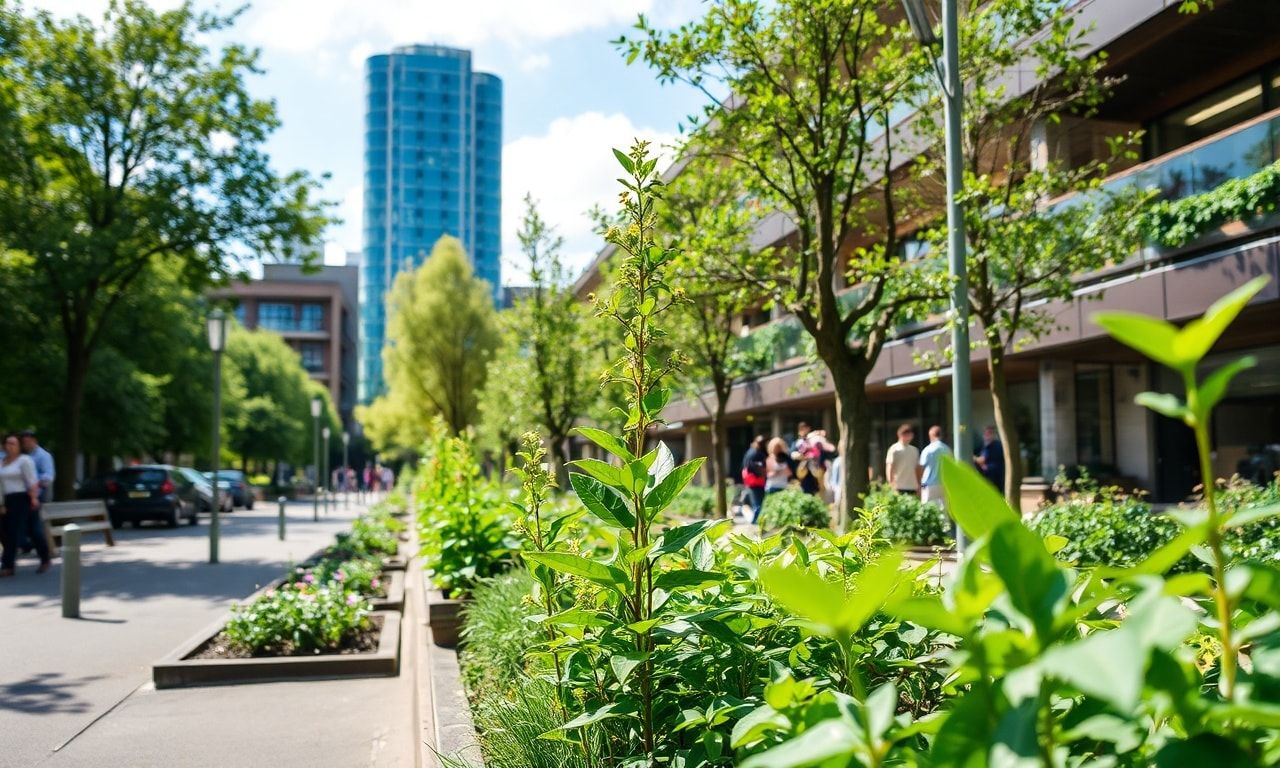
The Rise of Green Initiatives in Bristol
Bristol, a vibrant city in the southwest of England, has been making waves in the realm of sustainability. The city’s commitment to green initiatives has not only earned it the prestigious European Green Capital award in 2015 but has also positioned it as a model for sustainable urban living. From innovative recycling programs to ambitious renewable energy projects, Bristol is paving the way for other cities to follow.
Innovative Recycling Programs
One of the cornerstones of Bristol’s green initiatives is its innovative recycling program. The city has implemented a comprehensive waste management system that encourages residents and businesses to reduce, reuse, and recycle. The Bristol Waste Company, a council-owned entity, plays a pivotal role in this endeavor. It operates state-of-the-art recycling facilities and provides educational resources to promote waste reduction and recycling.
The city’s recycling rate has seen a significant uptick, thanks to these efforts. In 2022, Bristol achieved a recycling rate of over 40%, surpassing the national average. This success can be attributed to the city’s curbside recycling program, which accepts a wide range of materials, including paper, cardboard, plastics, and glass. Additionally, Bristol has introduced food waste recycling schemes, further reducing the amount of waste sent to landfills.
Renewable Energy Projects
Bristol’s commitment to sustainability extends beyond waste management. The city has embarked on several ambitious renewable energy projects aimed at reducing its carbon footprint. One such project is the Bristol City Leap, a partnership between the city council and private investors to deliver a range of low-carbon projects. These projects include the installation of solar panels on public buildings, the development of district heating networks, and the implementation of energy-efficient street lighting.
The Bristol City Leap is not only reducing the city’s reliance on fossil fuels but also creating jobs and stimulating economic growth. The project has attracted significant investment, with a total of £1 billion earmarked for low-carbon initiatives. This investment is expected to create thousands of jobs and boost the local economy, demonstrating that sustainability and economic growth can go hand in hand.
Community Engagement and Education
Central to Bristol’s green initiatives is the engagement and education of its residents. The city has launched numerous campaigns and programs to raise awareness about sustainability and encourage community involvement. For instance, the Bristol Green Capital Partnership brings together over 600 organizations to promote sustainable practices and share best practices.
Moreover, Bristol’s schools and universities are playing a crucial role in fostering a culture of sustainability. Educational institutions are integrating environmental education into their curricula and engaging students in green projects. This ensures that the next generation is equipped with the knowledge and skills to continue Bristol’s legacy of sustainability.
The Role of Technology in Bristol’s Green Initiatives
Technology plays a vital role in Bristol’s green initiatives, enabling the city to monitor and manage its resources more effectively. For example, the city has implemented smart meters to track energy consumption and identify areas for improvement. Additionally, Bristol is leveraging data analytics to optimize waste collection routes and reduce emissions from waste management vehicles.
Furthermore, Bristol is at the forefront of the smart city movement, using technology to enhance sustainability. The city has deployed a network of sensors to monitor air quality, noise levels, and traffic congestion. This data is used to inform policy decisions and improve the quality of life for residents. For instance, real-time air quality data is used to advise residents on the best times to exercise outdoors, particularly for those with respiratory conditions.
For those interested in the latest developments in sustainable urban living and technology, exploring trending topics popular discussions can provide valuable insights into innovative solutions being implemented worldwide.
The Future of Bristol’s Green Initiatives
Looking ahead, Bristol’s green initiatives are set to become even more ambitious. The city has set a target to become carbon neutral by 2030, a goal that requires significant effort and innovation. To achieve this, Bristol is exploring new technologies and partnerships to further reduce its carbon footprint. For example, the city is investigating the potential of hydrogen-powered buses and the development of a local hydrogen economy.
Additionally, Bristol is committed to enhancing its green spaces and promoting biodiversity. The city has launched the Bristol Tree Strategy, which aims to plant thousands of new trees and create urban forests. These green spaces not only enhance the city’s aesthetic appeal but also provide numerous environmental benefits, such as improving air quality and reducing the urban heat island effect.
In conclusion, Bristol’s green initiatives serve as a model for sustainable urban living. Through innovative recycling programs, ambitious renewable energy projects, community engagement, and the strategic use of technology, Bristol is demonstrating that sustainability and economic growth can coexist. As the city continues to push the boundaries of sustainability, it inspires other cities to follow suit and create a greener, more sustainable future.
In the realm of unconventional investments, a new trend is emerging that combines two seemingly unrelated worlds; learn more about sports and real estate opportunities in our latest feature.
To stay informed about the latest shifts in the region, consider reviewing Turkey’s economic developments and impacts which outlines recent changes and their implications.